PISGAH PROJECT 2026
In 2026, I’m centering Mt. Pisgah, her ecological, historical, and cultural importance, through a body of work I’m calling “Pisgah Project 2026.” I’ll be creating 26 paintings of Mt. Pisgah, including long-range views from different vantage points and paintings from the forest floor of Pisgah National Forest. Every other week, a new painting, and a new letter of the alphabet offering a new reason to appreciate and look for her among our mountains. I hope you enjoy the A-Z of Mt. Pisgah as we move through 2026.
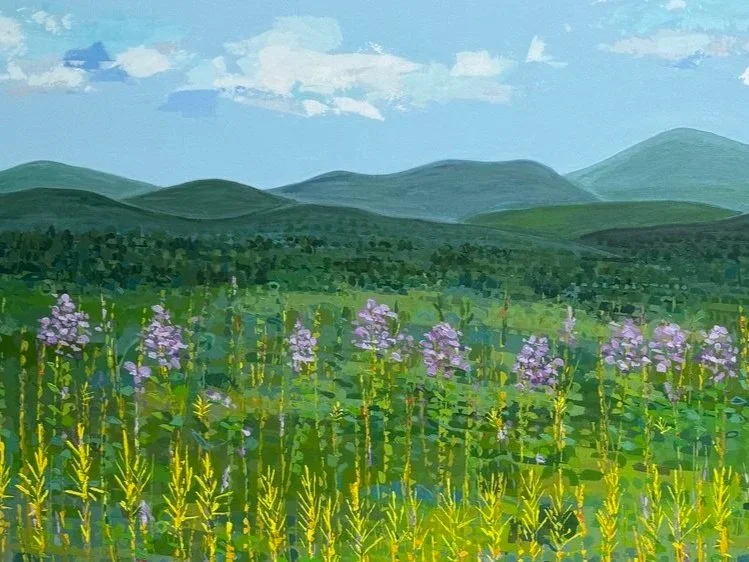
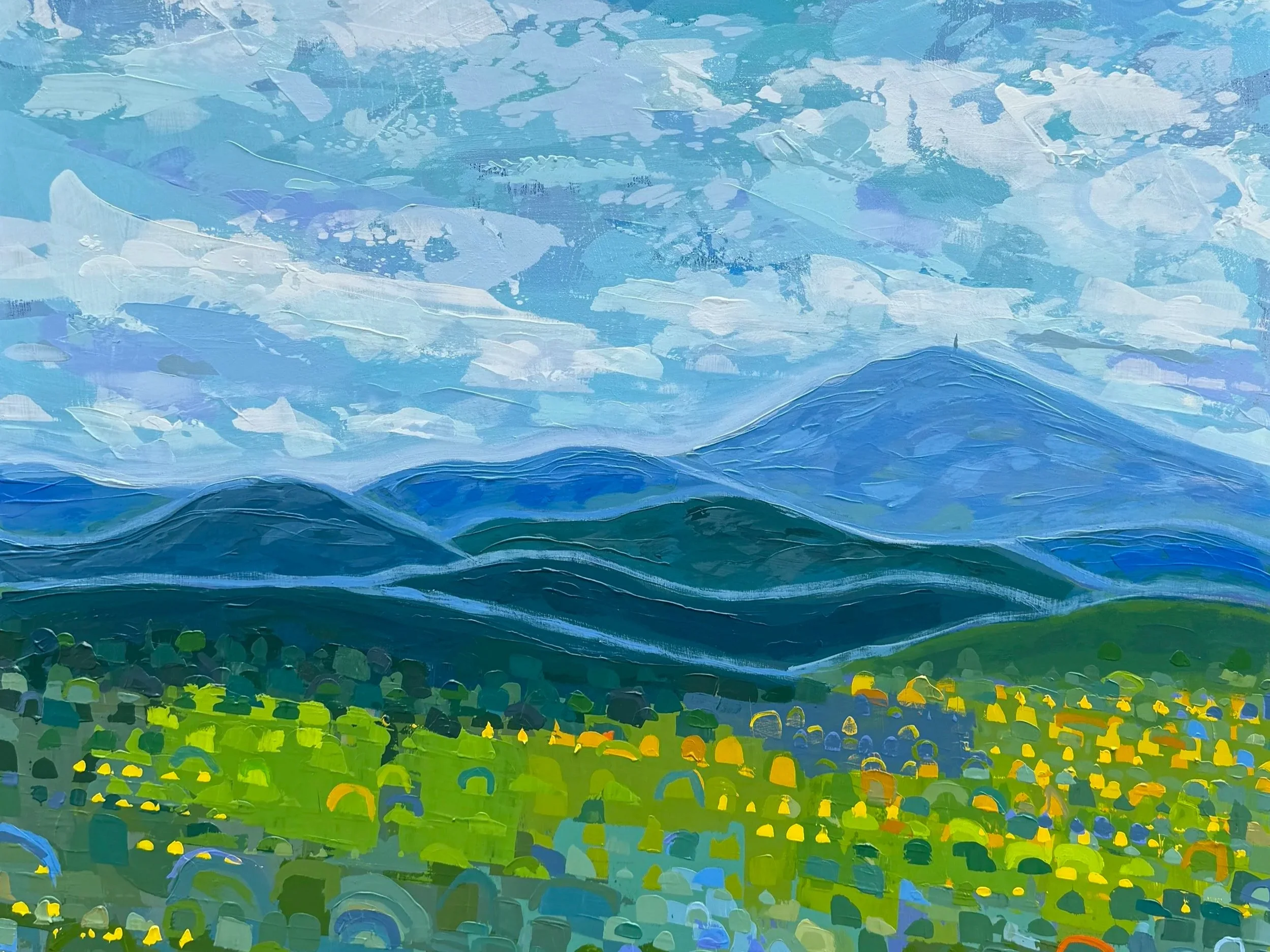
detail of Joe Pye Weed, Goldenrod, and Mt. Pisgah | 45” x 108” | acrylic on canvas | available through studio
A - ANCIENT MOUNTAINS
The Southern Appalachians, including Mt. Pisgah, are some of the oldest mountains in the world, formed around 480 million years ago through massive tectonic collisions. Over time, wind, water, and ice wore them down. Mt. Pisgah was once more than twice as tall as it is now, but erosion shaped it into the beautiful, rounded, wise-looking summit we see today, rising 5,721 feet (that’s over a mile!!) above sea level.
And even with all that age, these mountains are still very much alive—home to rich forests, incredible wildlife (hello, salamander capital of the world), and countless streams feeding our rivers. Ancient, resilient, and full of wisdom.
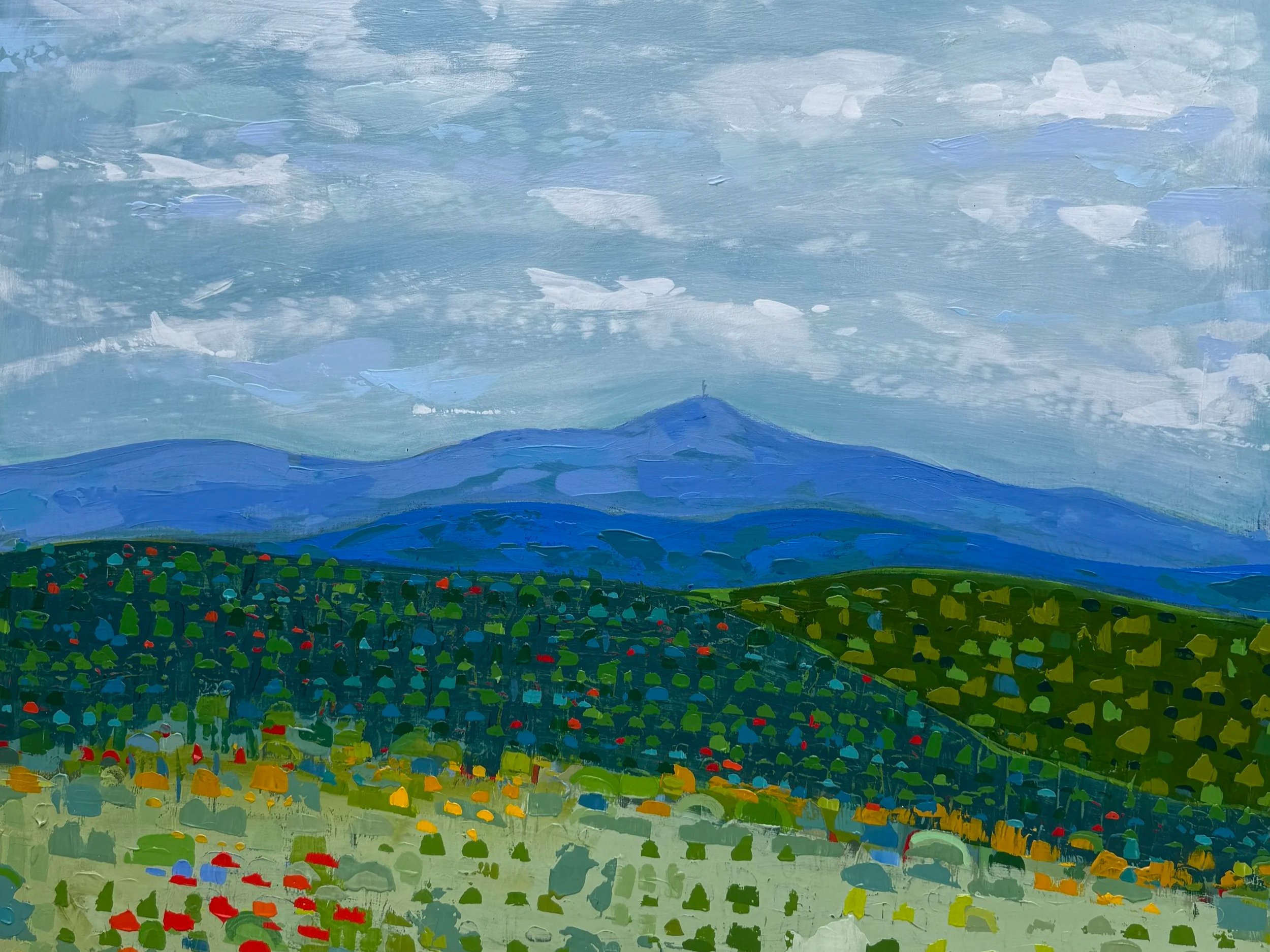
detail of Pisgah Patchwork | 32” x 32” | acrylic on wood | available at Spoonbill Gallery
B - Biodiversity hotspot
Pisgah National Forest is home to one of the greatest concentrations of temperate forest biodiversity on Earth. Here, northern and southern species overlap, high-elevation spruce-fir forests meet rich cove hardwoods, and countless microclimates create room for life to flourish. Rare salamanders, migrating warblers, wildflowers, fungi, and ancient trees all find a niche here. This abundance is more than scientific wonder; it is a living lesson in coexistence, interdependence, and shared belonging. The forest thrives not through dominance and competition, but through diversity, relationship, connection, and collaboration!
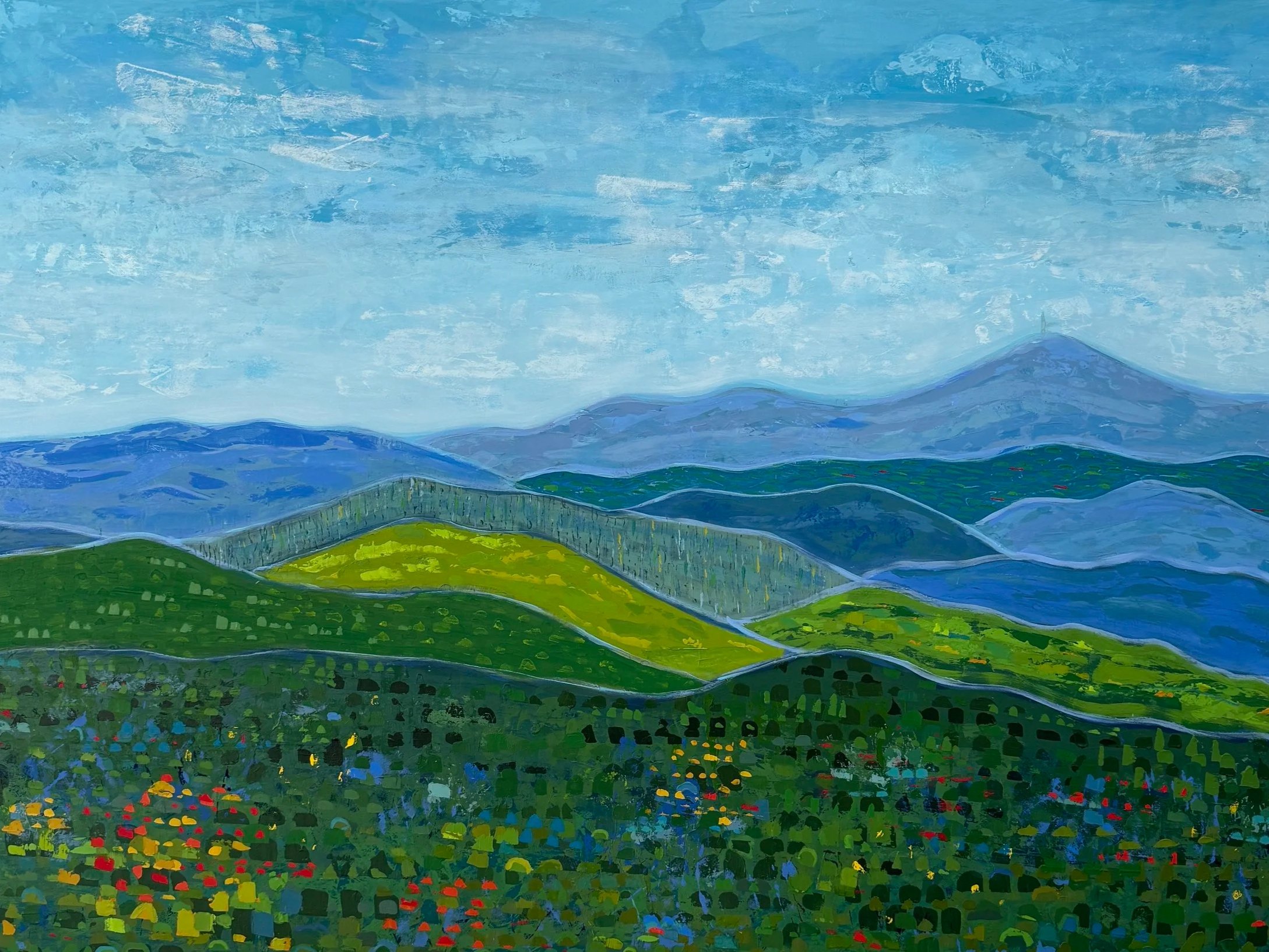
detail of Ancient Lands Under Big Sky | 40” x 60” | acrylic on wood | available through studio
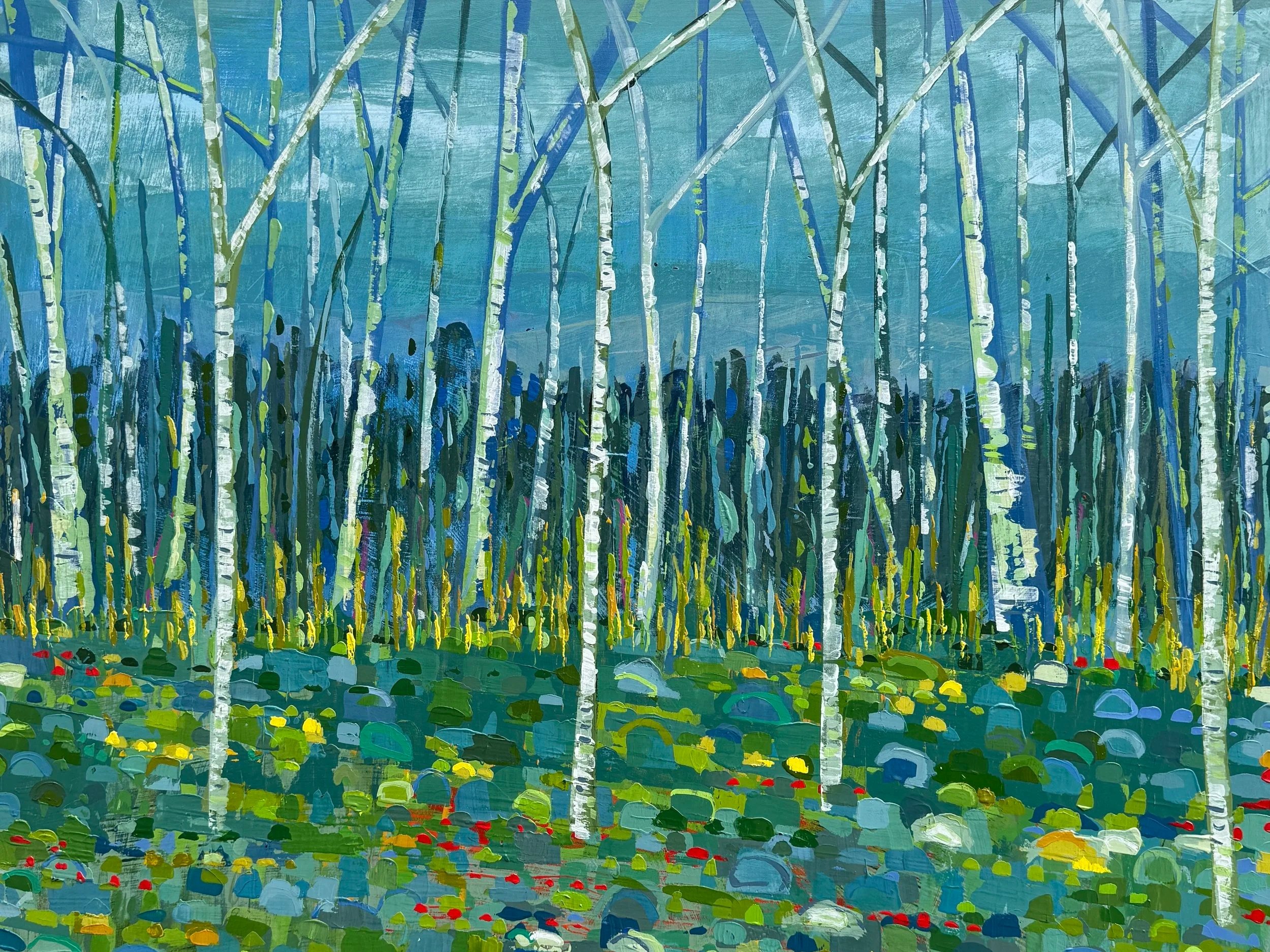
detail of Paper Birch in Ancient Mountains | 32” x 32” | acrylic on wood | available through Gallery COR
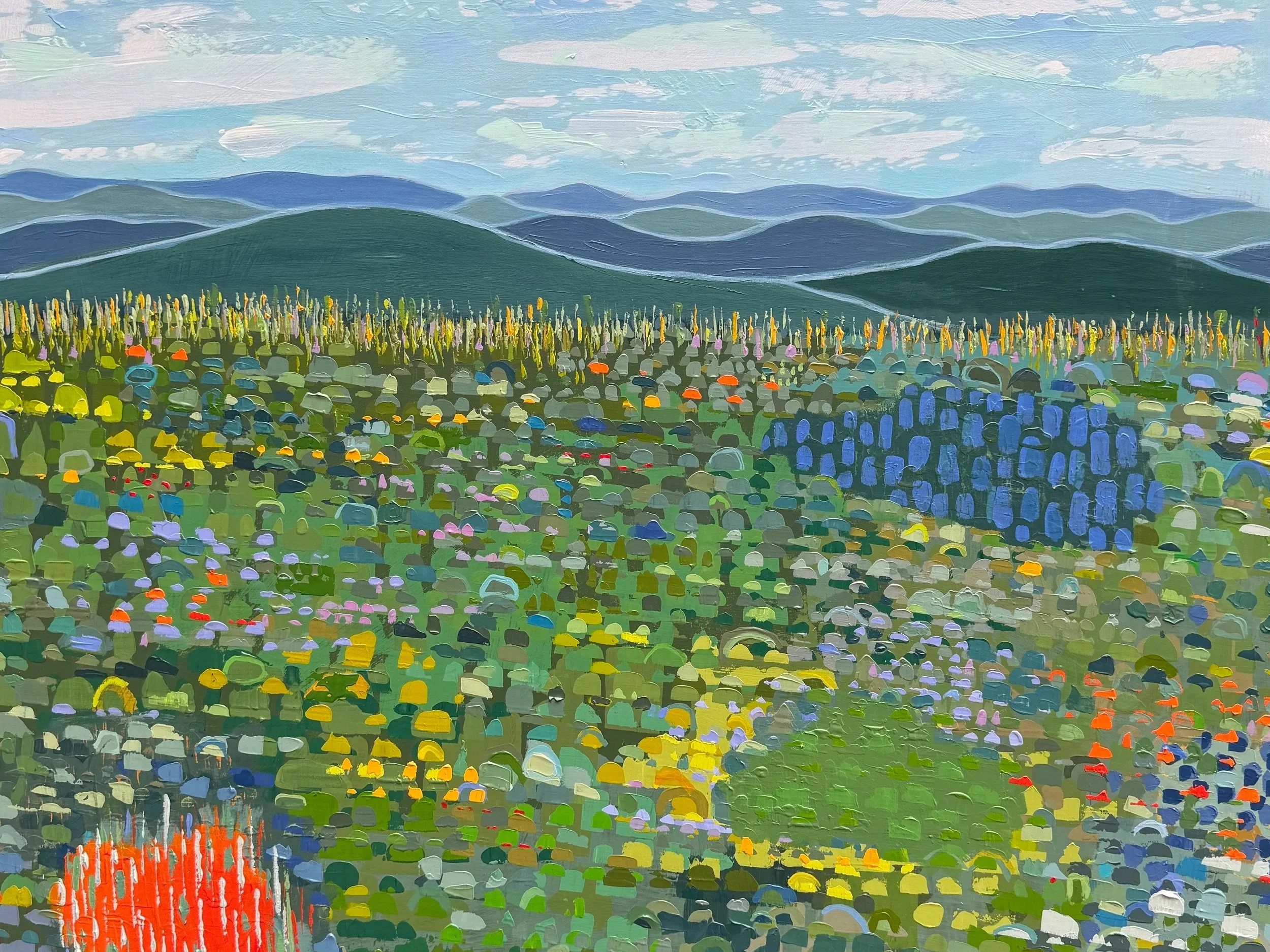
detail of Resplendent Meadow of the Blue Ridge | 36” x 36” | acrylic on wood
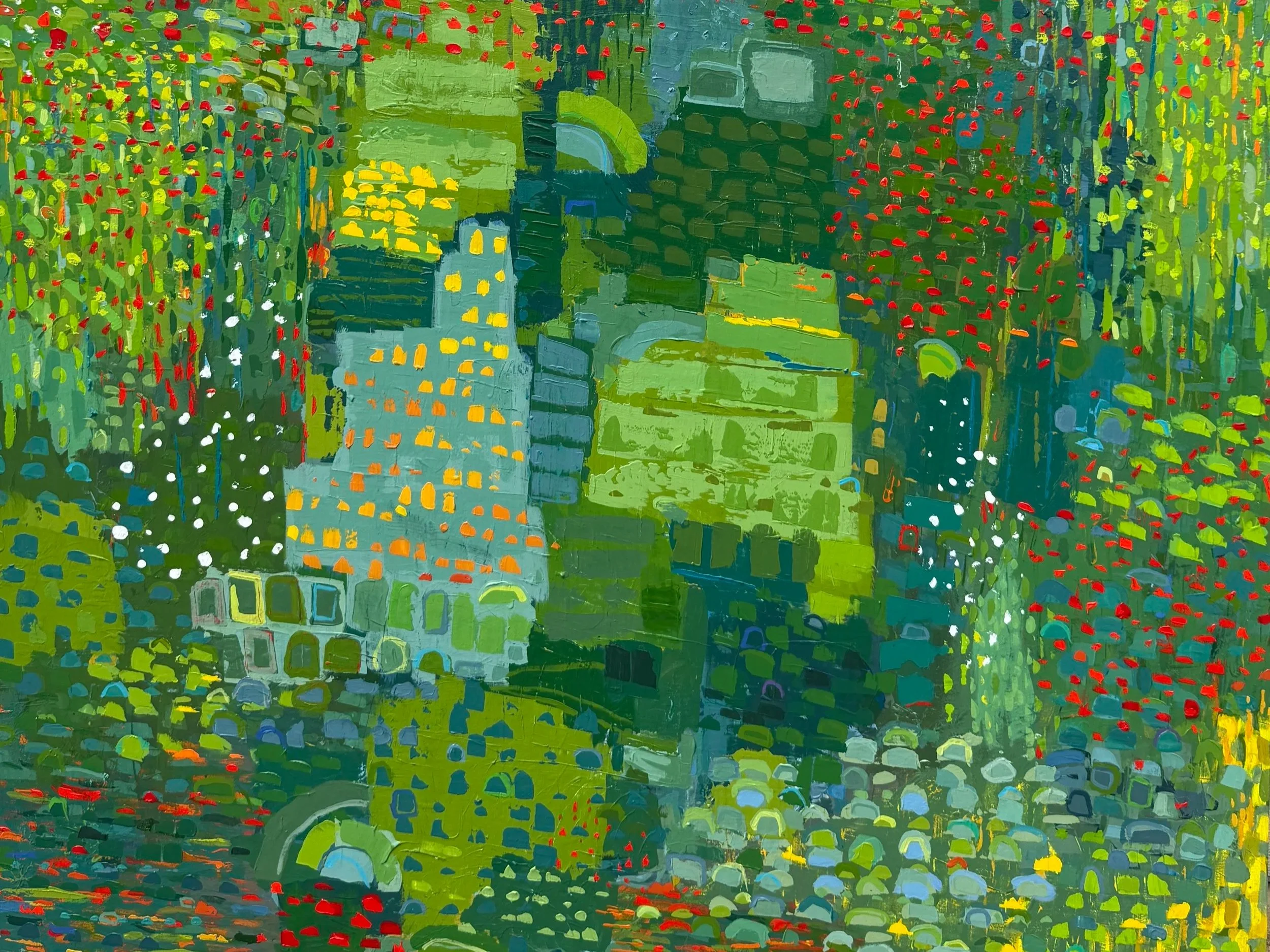
detail of Scarlet Bee Balm Super Bloom | 48” x 40 | acrylic on wood | available at Spoonbill Gallery
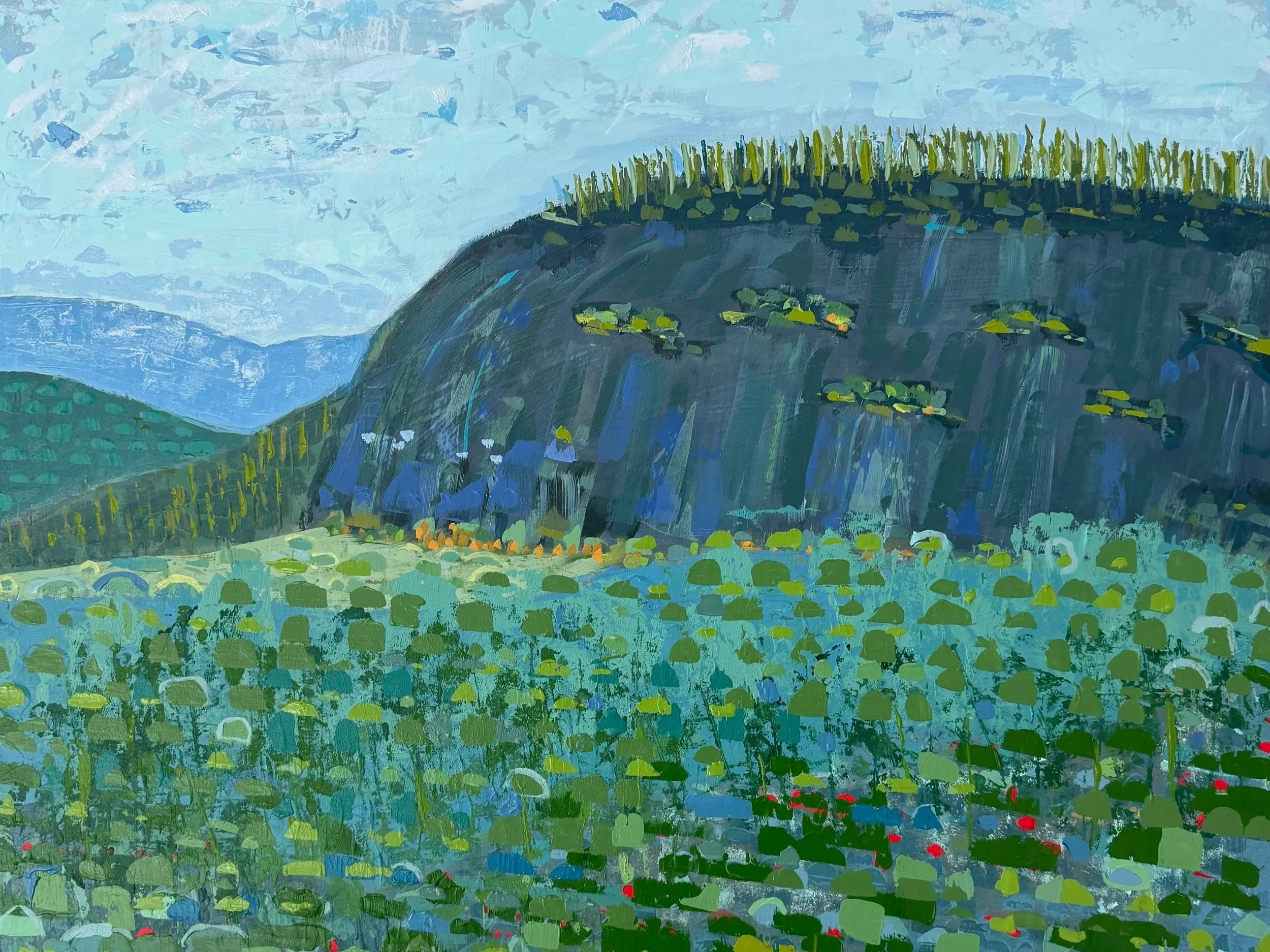
detail of The Luminous Monolith of Pisgah | 26x32 | acrylic on wood panel | available through studio
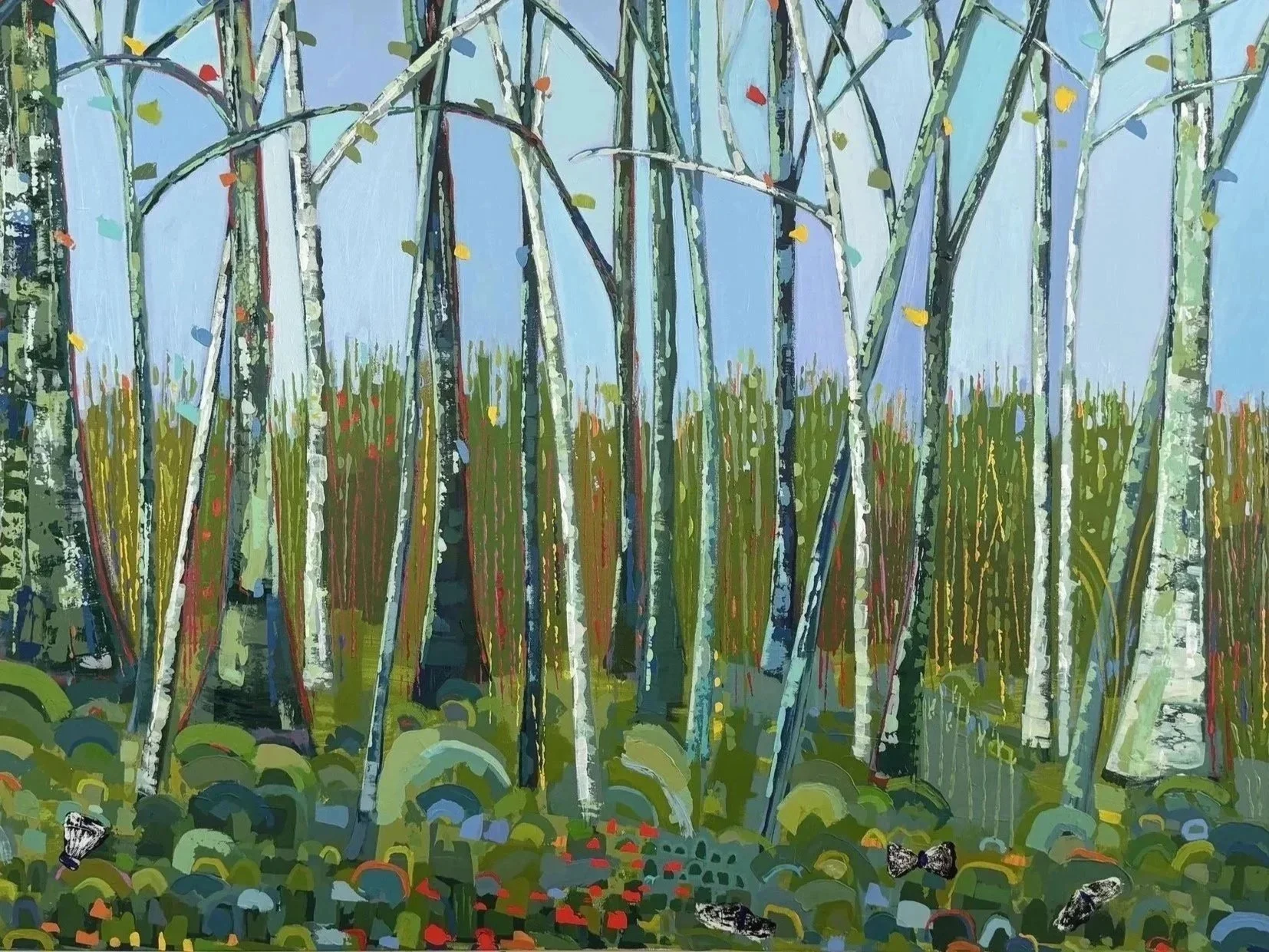
detail of Lichen Luminescence and Tulip Beauties | 36x72 | acrylic on canvas | SOLD
detail of Crane Fly Orchid Patch | 48” x 30” | acrylic on wood panel | available through studio
detail of Pisgah Bliss | 60” x 48” | acrylic on wood panel | available through studio
Pisgah Forest Bliss | 66” x 120” | acrylic on canvas | available through studio
Illuminated by the Lichen | 48x38 | acrylic on wood panel | available in November at Spoonbill Gallery
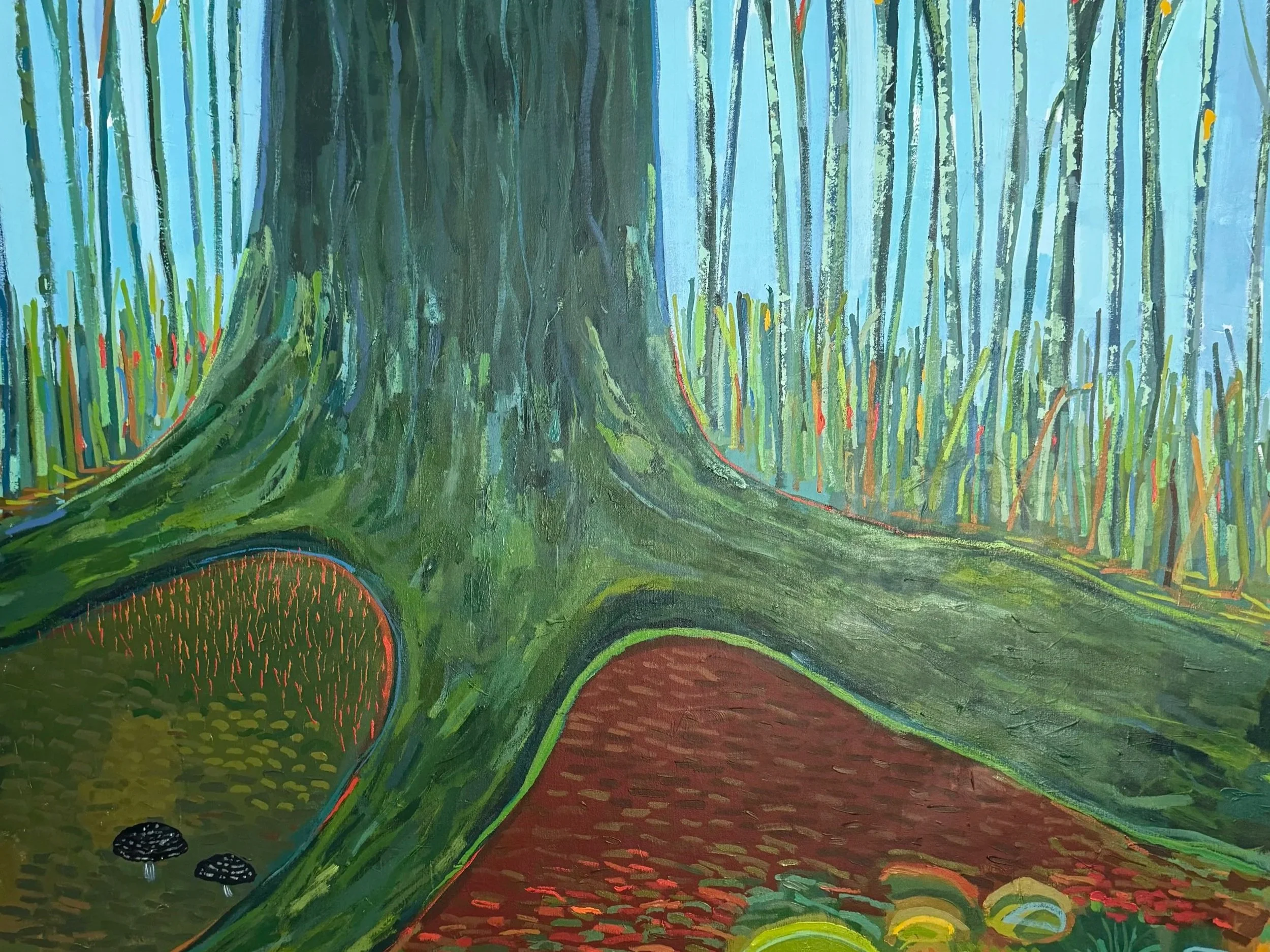
Old Man of the Woods in Oak’s Embrace | 66”x56” | acrylic on canvas | available
C - Cherokee Land
The Cherokee people lived in the mountains around Pisgah for thousands of years before European contact. Connection to the land was an integral part of their identity. Mt. Pisgah was part of a landscape they called home until their forced removal during the Trail of Tears in 1838, when approximately 16,000 Cherokee were expelled from their ancestral lands in western North Carolina and surrounding states. Today, the Eastern Band of Cherokee maintains the Qualla Boundary, a sovereign reservation about 30 miles west of Mt. Pisgah, where tribal members preserve their language, culture, and connection to their ancient homelands. The Museum of the Cherokee is a great place to learn more.
D — Deep Roots
In the late 1800s and early 1900s, intensive logging operations clear-cut vast swaths of Pisgah's old-growth forest, leaving behind stripped mountainsides vulnerable to erosion and devastating fires that consumed the remaining slash and topsoil. Yet the forest proved remarkably resilient: today, the deep roots of oak, hickory, rhododendron, and hemlock weave together an intricate web beneath Pisgah's mountains, creating a living network that stabilizes slopes, shares nutrients and water, and shelters countless species from salamanders in the leaf litter to black bears foraging in the canopy above.
E — Ephemerals
My favorite time of year in Pisgah National Forest is when the spring ephemerals seize their moment! Before the canopy closes and while the sunlight still floods the forest floor, these fleeting little blooms radiate with quiet urgency. They’re easy to overlook and gone before you know it, so don't wait for warm weather to get out on the trail!
F — FOREST FLOOR
The forest floor on Mount Pisgah is built from thousands of years of leaves breaking down into rich, dark soil, mixed with old rocks and a huge underground network of mycelium that helps everything grow. In the spring, you can see it come alive with trillium, spring beauties, and trout lilies, all rooted in the same ground that’s been walked on for generations. And if you pay attention, you’ll notice where water quietly rises up from underground aquifers, starting as a small trickle before becoming the creeks and streams you hear and follow through the forest.
G - GRANITE
I love thinking about deep time and the rocks I pass on while hiking through Pisgah remind me that my life is not even a blink compared to theirs.
Granite shows up in Pisgah in bold, unforgettable ways, like Looking Glass Rock (a pluton monolith). Some of these mountains actually began as granite over a BILLION years ago, then were reshaped and eroded by heat and pressure into the gneiss that makes up so much of this landscape.
The geology of Mt. Pisgah and Pisgah National Forest gives me a way to connect with something ancient, something wise, something much bigger than me - what a gift during what feels like cataclysmic times!
H - Hiking
I mean, it makes sense, we haven’t always hiked for exercise or recreation! Before the 19th century, walking long distances was associated with poverty, only those who couldn’t afford a horse traveled on foot. It took the chaos of industrialization to remind us where our bodies and souls thrive! And now, in our over-saturated world of screens and noise, we need what hiking offers us more than ever! Spending time on a trail (especially in our WNC mountains) makes everything better - it literally changes us! Of course I’m biased, but I think Pisgah National Forest is the best for aching souls! Plus, there are hundreds of miles of trails winding through some of the highest peaks in the Southern Appalachians. The 1,150 miles of the Mountains-to-Sea Trail passes right through Mt. Pisgah on its way to the Outer Banks.
I - Isoprene
That blue line outlining the ridges is intentional. It’s my way of highlighting isoprene, a natural compound released by the deciduous trees that cover our Pisgah’s mountains. Isoprene acts as a sunscreen for the trees, and when the sunlight hits that vapor, it creates the soft blue glow that makes the Blue Ridge Mountains, including Mt. Pisgah, so unmistakable.
I paint the lines to outline the mountains because I think the isoprene is magical!
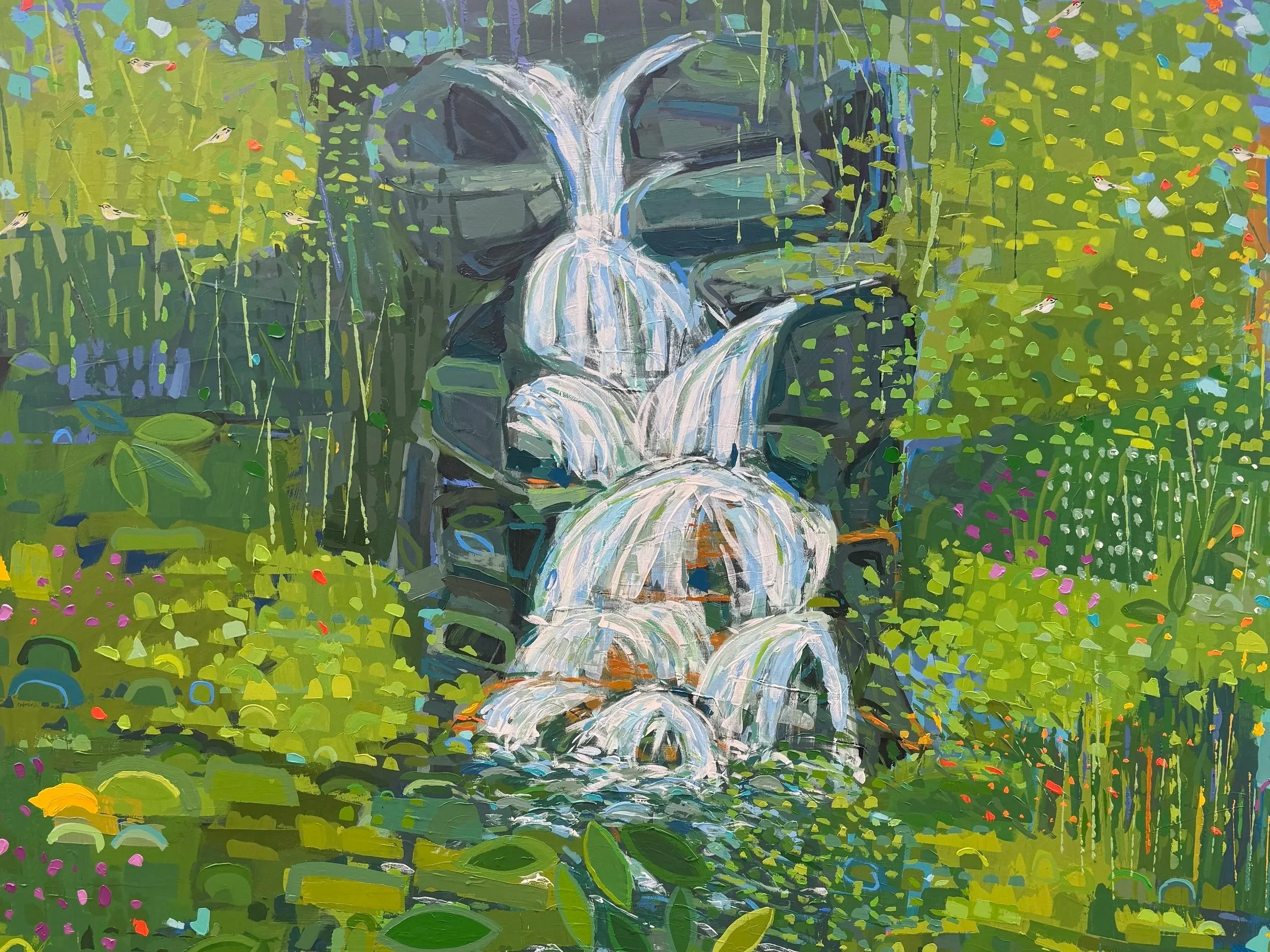
J, K, L - Jewelweed, kinglets, lower log hollow falls
This installment of Pisgah Project 2026 is a single painting that contains three letters at once: J, K, and L.
J - Jewelweed: It often grows along creeks, and Lower Log Hollow Falls provides just the right conditions for it to thrive. Its sweet orange flowers accentuate all the surrounding green!
K - Kinglets: Golden-crowned and ruby-crowned kinglets are tiny migratory birds, but their energy and tenacity make them feel mighty!
L - Lower Log Hollow Falls: This waterfall (one of over 150 in Pisgah National Forest) drops over ancient metamorphic rock, including an orange-ish rock at the bottom of the falls.
This is one of my favorite places in Pisgah National Forest, a spot I’ve hiked many times with family and visitors. This painting gives me the opportunity to highlight three of the MANY beautiful things to love about Pisgah in the summer!
M - MOTHS & MUSHROOMS
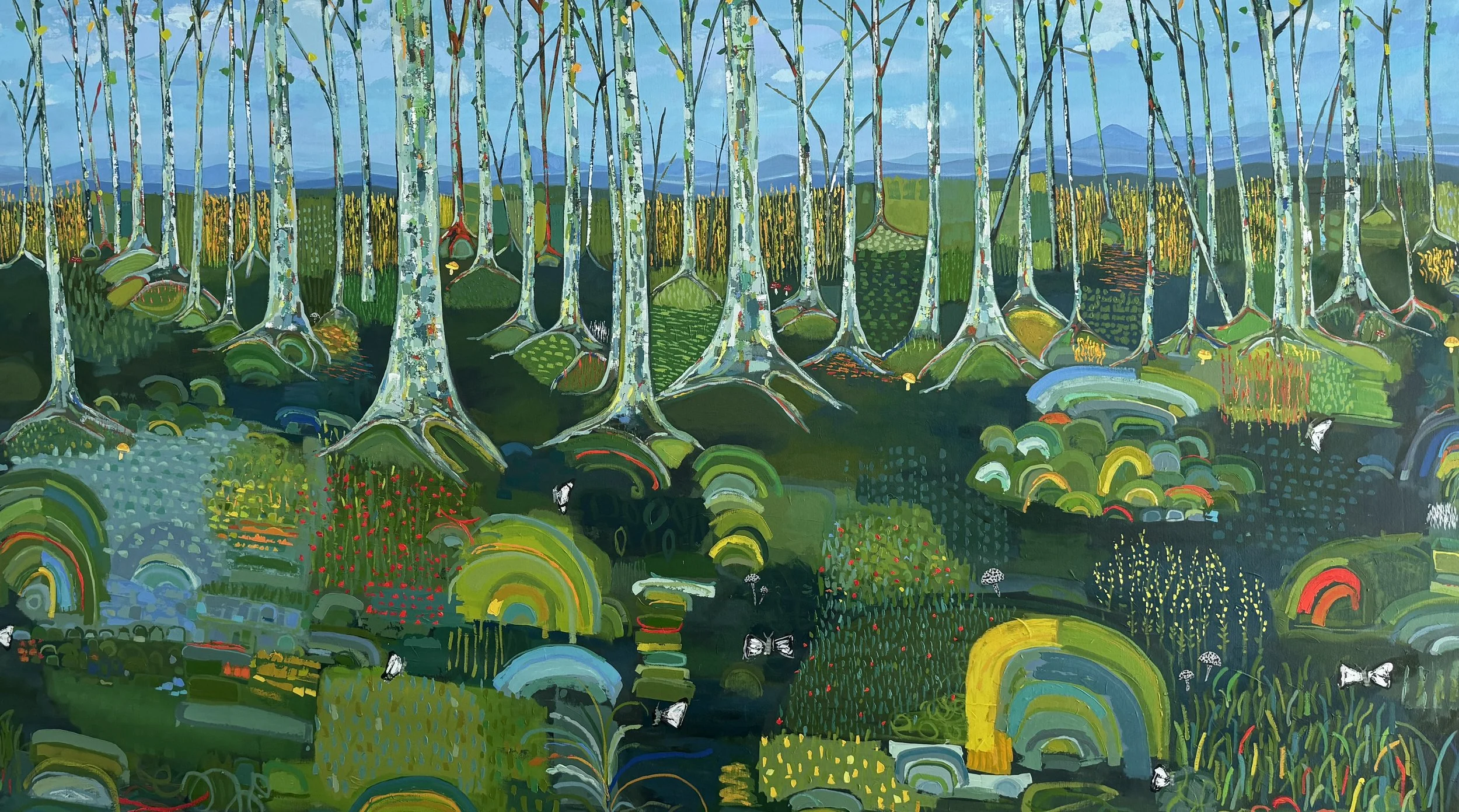
An abundance of moths and mushrooms dwell in the forests of Pisgah National Forest, and this painting has a little bit of everything: Mt. Pisgah rising in the distance, mushrooms scattered across the forest floor (including my favorite, the wonderfully named Old Man of the Woods), and moths fluttering through the understory, including Tulip Beauties and Wavy-Lined Emeralds. 💚
This large painting is available to anyone with deep, abiding love for the forests of Pisgah and the Southern Appalachians
N - NEWT (Salamanders!)
Pisgah National Forest in the Southern Appalachians is a global hotspot for salamander diversity, with more species found here than almost anywhere else on Earth! One familiar salamander is the eastern newt. If you’ve ever hiked the trails of Pisgah National Forest, you may have been lucky enough to spot one of their brilliant orange young, called efts, wandering across the forest floor. 🧡
These little amphibians are a wonderful sign of healthy, moist forest habitats and are an important part of the ecosystem. Just another reason to go for a hike!
O - OLD GROWTH FORESTS
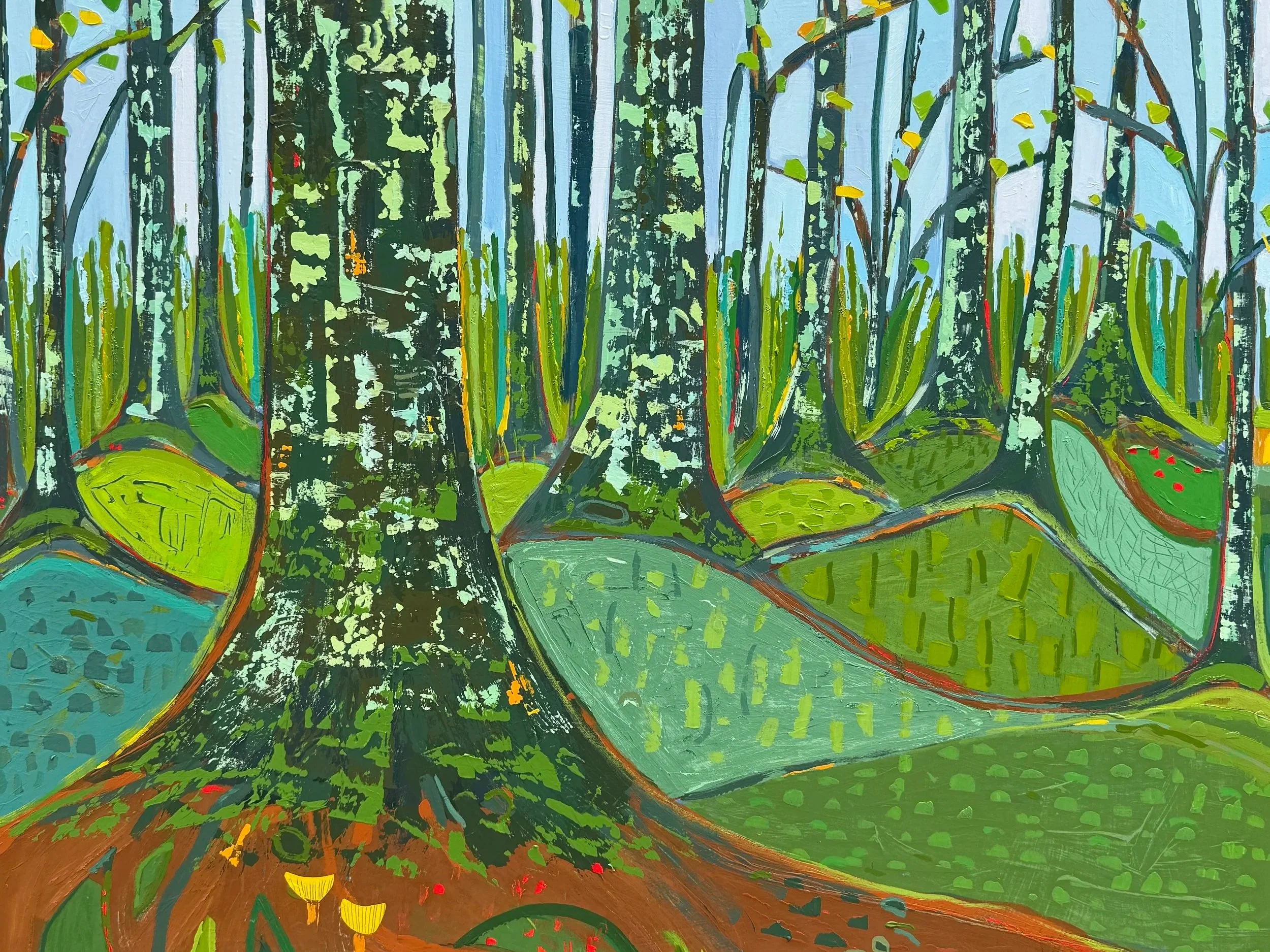
Much of Pisgah’s forest is young compared with the forests that stood here before widespread logging. But pockets of old growth survived, and the forests are slowly becoming old again.
This old oak feels like a bridge between what was and what can be. Its roots reach out to embrace us, reminding us that forests hold memory